
EV Charging Protection, Emergency Solutions, and Apartment Infrastructure As electric vehicle (EV) adoption rises (8.6% of U.S. vehicle sales in 2023 and projected to grow substantially), ensuring safe, reliable charging is crucial. EV charging infrastructure must be protected from damage and theft, and drivers need emergency options when batteries run low. At the same time, apartment communities are increasingly installing EV chargers to attract eco-conscious tenants. This comprehensive guide covers EV charger protection methods, emergency mobile charging solutions, and EV charging in apartments, with actionable tips for EV owners, property managers, renters, and roadside service providers. Recommended: EV Charging Systems & Methods EV Charger Protection Methods An EV charger protection system includes barriers and security features that safeguard charging stations from vehicle impacts, vandalism, and weather. Physical guards like bollards, posts, or barriers are commonly installed around charging units to prevent cars from accidentally striking them. For example, concrete or metal bollards (short posts) and wheel stops (parking curbs) create a buffer that keeps vehicles at a safe distance. These devices are often required by safety standards to maintain clearances (e.g. 3 feet) around chargers. Bollards/Posts: Sturdy posts placed around chargers to block vehicle impact Wheel Stops: Parking blocks in front of chargers to prevent cars from rolling into equipment Cable Protectors: Rigid covers or ramps over charging cables to prevent tripping hazards when laid on the ground. Enclosures & Covers: Weatherproof housings or locks for chargers and cables protect against rain, sun, and vandalism. Beyond physical barriers, securing the charger and cable is important. Many home and public chargers allow locking the connector to the car or using a padlock, making it hard for thieves to steal the cable. Some EVs have built-in locking loops for cables. A tethered charger (one permanently affixed cable) also deters theft since the cable cannot be removed. Smart chargers offer built-in security PINs or app controls to lock out unauthorized use. Installing surveillance cameras, motion-activated lights, or even a dashcam can deter vandals and thieves. New technologies are also emerging: for instance, ChargePoint’s “Protect” system uses the charger’s speakers and lights to sound an alarm if cable tampering is detected. Some networks are deploying cut-resistant charging cables made of novel materials to make theft more difficult. Protection Method Purpose/Description Bollard/Post Barrier Prevent vehicle collisions with charging unit. Wheel Stop Parking curb to keep car at safe distance from charger. Lockable Charger/Cable Padlocks or tethered cables to deter theft. Surveillance/Alarm Cameras, lighting, or alarms to catch tampering. Weatherproof Enclosure Sealed boxes or covers to protect from rain/sun. Proper charger protection also includes insurance and policy: homeowners or building insurance may cover charger damage if installed permanently, but check policies. Finally, always store portable charging cables securely indoors when not in use. In short, combining barriers, locks, and monitoring can greatly reduce the risk of physical damage or theft to EV charging equipment. EV Emergency Mobile Charging Solutions Even with careful planning, EVs can run out of charge on the road. Unlike gas cars, EVs can’t simply “push start,” so drivers must plan for emergencies. Portable chargers and mobile charging services are the solutions. A standard Level 1 (120V) portable charger – the 8–12 amp cord many EVs include – only adds about 2–3 miles of range per hour. According to Tesla, a 120V outlet “supplies 2 to 3 miles of range per hour charged”. The U.S. Department of Transportation notes that Level 1 charging can take 40–50+ hours to recharge a full EV battery to 80%. This is clearly too slow for roadside emergencies, offering essentially an “overnight trickle” (a few miles gained per hour). For faster fill-ups, Level 2 charging (240V) at 30–50 amps is common: it can deliver tens of miles of range per hour, enough to top up most EVs overnight. For true on-the-road emergencies, battery-powered mobile chargers bring DC fast charging to the car. These units are typically installed in service vehicles (vans or trucks) and carry a high-capacity battery and inverter. For example, SparkCharge’s Roadie Portable system stacks 3.45 kWh battery modules with a 20 kW DC charger to deliver “about a mile per minute of range”. By adding multiple battery packs, Roadie can provide up to ~60 miles of range in one deployment. Similarly, specialized systems like Power Sonic’s EVES series combine DC fast charging and integrated batteries to create an on-demand charger. These off-grid fast chargers can output 30–120 kW and are ideal for breakdown and emergency response. In use, a mobile charger can quickly boost an EV’s battery to get home or to the nearest station (often in under an hour to 80%). Battery-powered mobile EV chargers (like Power Sonic’s EVES shown above) carry an internal battery pack and DC fast charging cables, enabling on-the-spot charging anywhere without grid connections. On the service side, companies like BeeCharged EV and Amped Up EV Charging offer 24/7 mobile charging assistance. They dispatch technicians with portable chargers or use these battery-powered units to reach stranded EV drivers. For fleet operators, charging-as-a-service providers (e.g. SparkCharge’s CaaS) handle mobile charging logistics entirely, swapping charged battery units and monitoring usage remotely. Summary of emergency options: Solution Typical Speed/Range Use Case Level 1 Portable (120V) ~2–3 miles of range per hour Overnight emergency at home (very slow) Level 2 Portable (240V) 10s of miles of range per hour Extended travel (requires 240V outlet) Mobile DC Fast Charger (Battery) ~20 kW (≈20 mi of range per hour) Roadside fast fill-up (e.g. SparkCharge Roadie) Mobile Charging Service Varies (e.g. 50–65 kW) On-demand professional EV charging (BeeCharged, AmpedUp) In practice, EV drivers should carry a basic Level 1 cable for emergencies (even a few miles can help reach a proper charger) and keep an app like PlugShare handy to locate public charging. For range anxiety, some drivers also invest in “range extender” battery packs or portable Level 2 chargers (hardwired to 240V) when allowed. Commercial roadside services are expanding fast: for instance, Voltai’s 56 kWh van-mounted charger delivers 60 kW to stranded EVs without permits. These solutions ensure that an EV isn’t
Understanding Level 1 EV Charging
Understanding Level 1 EV Charging Level 1 EV charging is the simplest, lowest-powered way to charge an electric vehicle. It uses a standard household electrical outlet (in the U.S., a 120-volt NEMA 5-15 socket) and delivers roughly 1–2 kW of power. This translates to adding only about 3–6 miles of range per hour of charging. In practice, a full charge from empty can take anywhere from 8 to 40+ hours depending on the battery size. For example, a Chevy Bolt EV (~60 kWh) gains about 4 miles per hour at 120 V/12 A, requiring over 40 hours for a full charge. Despite its glacial speed, Level 1 charging is very easy to use: you simply plug the EV’s charging cable (often provided with the vehicle) into any grounded 120 V outlet. Many EV owners with short daily commutes (under ~30–40 miles) find that overnight Level 1 charging is adequate to replenish their battery. Figure: A typical EV plugged into a home (Level 1) charger. Level 1 charging uses standard household outlets (120v) to charge your electric vehicle and adds roughly 3–6 miles of range per hour What Is Level 1 EV Charging? Level 1 charging refers to charging an electric vehicle (EV) using 120-volt AC power – the same voltage as standard U.S. appliances (toasters, lamps, phone chargers). A Level 1 EVSE (Electric Vehicle Supply Equipment) is essentially a long, heavy-duty extension cord: one end plugs into a wall outlet, the other end plugs into the car. The EV’s onboard charger then converts this AC power to DC to charge the battery. In North America and Japan, Level 1 cables use the SAE J1772 (Type 1) connector to mate with the vehicle. Level 1 charging is universally compatible with plug-in hybrids (PHEVs) and battery EVs because all EVs have onboard chargers that accept 120 V input. In fact, automakers typically include a Level 1 charging cord with every new EV or PHEV purchase. This “portable EVSE” is meant for occasional or overnight use. In contrast, Europe does not have a “Level 1” category because residential power is 230 V by default. European drivers usually plug EVs into a standard 230 V outlet (Schuko/Type F) at 8–16 amps. This yields roughly 2.3–3.7 kW (about 10–20 mi/h) and is considered slow AC charging (sometimes called Mode 2 in Europe). In practice, home charging in Europe is treated like a low-power Level 2 charger. Top Level 1 EV Chargers EVDANCE Level 1 EV Charger | 110V/240V | 6-16A | 25FT Cable Adjustable current for flexible charging Long 25-foot cable for convenience Compatible with standard outlets Check Price Ecogenix 2025 Upgraded Level 1 EV Charger | 16A | 21FT Cable Upgraded for 2025 models Adjustable current settings Portable design for travel Check Price Portable Level 1 EV Charger | 15A |110V | 21FT Cable Simple plug-and-play setup Compatible with all J1772 EVs Durable and weather-resistant Check Price How Level 1 Charging Works Level 1 EV charging is a form of AC charging. The power from the outlet is alternating current (AC), but EV batteries store direct current (DC). The EV’s onboard charger handles the AC→DC conversion. Since Level 1 delivers only about 1–2 kW, the onboard charger must work relatively slowly (over many hours) to fill the battery. By contrast, Level 3 (DC fast) chargers convert AC to DC off-board at high power and feed DC directly to the battery, bypassing the onboard charger. This is why DC fast chargers (480 V DC, 50–350+ kW) can replenish hundreds of miles in 20–30 minutes, whereas a Level 1 charger takes overnight or longer. Feature / Parameter Level 1 (120 V AC) Level 2 (240 V AC) Level 3 (DC Fast Charging) Voltage & Phase 120 V AC, single-phase 208–240 V AC (US/Japan), 400–1000 V DC (varies by station) 230 V (Europe, single-phase) Typical Power Output ≈1–2 kW ≈3–22 kW 50–350 kW (and up) Connector (NA/Japan) J1772 (Type 1) plug J1772 (Type 1) plug CCS1, CHAdeMO, or Tesla NACS Connector (Europe) — (not used) Type 2 (Mennekes) plug CCS2, CHAdeMO, or Tesla NACS Current 8–16 A 12–80 A up to several hundred amps Approx. Charge Rate ~3–5 miles range per hour ~10–30 miles range per hour ~100+ miles range per 30 min Charge Time (0–80% for 60kWh) 40–50+ hours 4–10 hours 20–60 minutes Typical Use-Cases Overnight home charging; Home, workplace, public Public fast-charging corridors emergencies (shopping centers, offices) (highways, fleet depots) Level 1’s low voltage means very slow charging. For instance, a typical BEV might add only about 5 miles of range per hour at 120 V. A fully depleted 60 kWh battery could take 40–50+ hours (over one to two days) to reach 80% on Level 1. This makes Level 1 suitable only for topping up overnight or for plug-in hybrids with small batteries. Table: Comparison of charging levels for light-duty EVs. Level 1 (120 V) is the slowest, adding only ~2–5 miles of range per hour, whereas Level 2 (240 V) typically adds ~10–20 miles per hour and DC fast chargers add hundreds of miles in under an hour. Level 1 EV Charging Setup Setting up Level 1 charging is usually trivial. All you need is a grounded 120 V outlet (NEMA 5-15R) near where you park the car. No new circuit or permits are required in most cases. The EV’s Level 1 charging cable (often ~15–20 ft long) plugs into the outlet and into the vehicle’s charge port. Many owners keep the vehicle cable at home and simply plug in each night. If you don’t have a conveniently located outlet, you might hire an electrician to install one in your garage or driveway. The electrician can ensure the outlet is properly grounded and on a dedicated 15–20 A circuit (as recommended by the EV manufacturer). Installing a dedicated outlet (instead of sharing one with lights/appliances) avoids tripping breakers and maximizes safety. For outdoor charging, make sure any outlet or cable you use is weatherproof or designed for outdoor use; regular extension cords or unprotected outlets are not recommended. In the U.S., Level 1 uses a three-pronged NEMA 5-15 plug on the cable. In Europe, EV charging from a standard socket also typically uses a Schuko (Type F) plug at up to 10 A (≈2.3 kW). Some European EVs permit 16 A on special sockets (≈3.7 kW),
Tesla Supercharger Hosting Guide: Site Requirements, ROI & Incentives
Tesla Supercharger Hosting: Business Partnerships and ROI Tesla Supercharger stalls attract EV drivers and can boost nearby business traffic. Tesla builds, owns and operates the stations, partnering with property hosts (hotels, retailers, parking facilities, etc.). Tesla’s Supercharger network is a proprietary high-speed charging system built and operated by Tesla (over 17,000 plugs in the US). Unlike a franchise, Tesla partners with site owners: Tesla designs, pays for and maintains the chargers, while hosts provide the land and coordinate local requirements. Tesla handles equipment, construction and electricity (including grid fees) for Superchargers, so hosts incur minimal direct costs. In effect, hosting a Supercharger is a collaborative investment: you contribute the site and prepare it for high power, and Tesla invests in the EV charging infrastructure. Recommended: Best Lectron Tesla EV Chargers for Home and Travel Tesla Charger Adapters Tesla Cable Organizers How Tesla’s Supercharger Hosting Model Works Tesla owns the Superchargers and their operation. The company covers charger hardware, installation labor and ongoing maintenance. (Notably, Tesla also pays the electricity used at Supercharger sites, so hosts don’t face the energy bill for charging sessions.) In return, your business gains exposure to Tesla drivers via the in-car navigation system, which directs EVs to Superchargers. Tesla lists approved locations on its public map, driving traffic to host sites. (Tesla has even begun opening many Superchargers to all EVs with the NACS adapter, broadening the customer base). You are not charged fees or royalties by Tesla for hosting. Instead, you benefit from increased foot traffic and longer customer dwell time. In some cases, site hosts negotiate a lease or a small revenue share from charging fees, though most benefit indirectly through added sales. Key Point: Tesla treats hosts as partners. Tesla “manages construction and operation” of Superchargers on your site, so you have “nothing extra required. Hosts mainly provide the land and handle utilities/permitting. Recommended: Tesla’s Switch to the NACS Connector: What U.S. EV Drivers Need to Know Can Any EV Use a Tesla Charger? Explained for New EV Owners Site Selection and Host Requirements Successful Supercharger sites meet Tesla’s criteria for space, traffic and amenities. Key requirements include: Parking & Space: Typically 8–12 dedicated parking stalls (or more) are needed. Tesla generally looks for at least 8 parking spaces near amenities. The stalls should be grouped together, with room for charger pedestals or canopies. High Traffic Location: Sites on busy corridors, near highway exits, shopping centers, hotels or restaurants are preferred. Tesla’s in-car navigation will send EV drivers to the nearest Supercharger. Busy travel or commuter routes (often along Interstate corridors) maximize usage. Amenities & Dwell-Time Services: Proximity to restrooms, cafes, convenience stores, restaurants, and Wi-Fi is ideal. Studies show EV drivers spend charging time purchasing snacks and coffee – businesses near chargers see an average +$1,500 in annual sales post-install. Sites with shopping, dining or entertainment encourage longer stays and extra revenue. Ease of Access: Level, well-lit sites with clear signage (and easy entry/exit for vehicles) improve the customer experience. ADA-compliant parking layouts (11×20 ft stalls for accessibility) and pedestrian paths should be included. Utility Capacity: Your property must handle the heavy electrical load. Superchargers typically require high-voltage three-phase power (commonly 480V AC or medium-voltage distribution with on-site transformers). Discuss with your utility early to confirm capacity. Tesla will specify exact power needs, but in general plan for megawatt-scale service (e.g. V3 Supercharger stalls can draw ~250 kW each). By meeting these criteria, hosts tap into Tesla’s EV driver base. As one analyst notes, “if you own or lease a shopping center, hotel, gas station, or even a parking lot, you could be eligible to host Tesla Superchargers—turning your property into a revenue-generating asset. Approval and Installation Process: Step by Step Pre-Application: Assess feasibility. Engage Tesla early by visiting the Tesla Host Application page. Prepare basic info: address, site plan, expected stall count, nearby amenities, and existing electrical capacity. In parallel, consult your utility to estimate upgrade costs. Submit Application: Through Tesla’s site or sales team. Provide details on location, property owner contact, traffic counts, and amenities. Tesla will evaluate factors like traffic demand and grid readiness. According to Tesla sources, approval can take several months. Site Survey & Agreement: If preliminarily accepted, Tesla conducts an on-site survey with engineers. They confirm space for chargers, check electrical service, and work with you on a draft agreement. Tesla generally covers site preparation related to the chargers themselves. You will agree on responsibilities (often you handle site prep, Tesla handles chargers). Permitting & Utility Coordination: Initiate permits for electrical work, construction, and any zoning updates. Coordinate with the local utility for a make-ready service connection (new transformer, meter, conduit, etc.). Many utilities offer “make-ready” incentives to offset these upgrades. This phase can take weeks to months depending on local processes. Construction & Installation: Tesla schedules the build. Their installation teams will pour pads, mount pedestals or canopies, trench cables, install hardware and signage. Tesla’s standard approach is fast: some sites report prefabricated components that allow installation in as little as 1–2 weeks once permits and power are ready. Commissioning: After installation, Tesla tests each charger, integrates payment systems, and activates the site on the Tesla network. Once live, the chargers automatically appear on Tesla’s map (and soon on third-party mapping for NACS adapters). Throughout this process, Tesla “manages construction and operation” on your site. The host’s project manager role is typically to coordinate permits, utility access, and site prep. Cost Breakdown: Tesla Supercharger Installation Cost Tesla’s model greatly reduces host costs. Tesla covers: Charger hardware and installation – Tesla owns the Supercharger units and pays for erection of the equipment and canopies. Maintenance and Repairs – Any upkeep or repairs on chargers is Tesla’s responsibility. Electricity at the chargers – Unlike slower destination chargers, Tesla pays the power cost for Supercharger stalls. (Sites are not billed for kWh used; Tesla bills the driver and covers the bill.) Hosts’ responsibilities and costs typically include: Site Preparation: Clearing land, grading, paving or restriping parking, installing
NEMA EVSE Charging Station Installation Guide (Wall, Pole, Pedestal Mounts)
NEMA EVSE Charging Station Installation Guide If you’re looking to install a NEMA EVSE Charging Station at home or for commercial use, understanding the proper installation method is key. This guide covers essential instructions, mounting options (wall-mount, pole-mount, pedestal, and back-to-back), safety steps, and required tools. Everything here is based on manufacturer documentation and real installation practices. Before You Start: Installation Prep Checklist Before diving into the physical installation of your EV charger, review all included technical drawings (front, plan, and connection views). These will help you follow local codes and ensure proper placement of the EVSE unit. Safety Instructions You Shouldn’t Skip Wear safety glasses when working with electrical tools or wiring. Do not connect power while making or modifying wire connections. Always follow lockout/tagout protocols when the unit is energized. Use only the recommended tools to ensure proper fit and torque. Supported Installation Types for NEMA EVSE Stations The NEMA EVSE charger is built to accommodate various mounting configurations: Wall-MountedIdeal for garages or exterior home walls. Requires mounting screws and wire access through walls. Pole-MountedGreat for open parking lots or curbside installs. Offers vertical mounting using a conduit pole and secure bracket attachments. PedestalA free-standing unit for parking areas. Common in commercial or multi-unit properties. Back-to-Back PedestalEnables two EV chargers on a single pedestal – perfect for high-traffic EV stations. Each configuration follows ADA standards for accessibility and mounting clearance. Torque Specs & Tools You’ll Need Here are the main torque settings and fasteners: Screw Size Torque Tolerance 5-32 UNC 13 in-lb ±2 in-lb 1/4-20 UNC 30 in-lb ±5 in-lb GROUND TERM. SCREWS 38 in-lb ±5 in-lb 3/8″ LOCKNUT Hand Tight + ¼ Turn – Tools Required: Slotted Screwdriver (3/16” or ¼”) Phillips #2 Screwdriver Socket Set (7/16”, ⅜”) Drill + wall anchors Wire stripper, hammer, and level Wire Size and Field Cable Guidance To ensure safe and proper power delivery: Wall or Pole Mounts:Use Cu 8 AWG, rated for 75°C minimum. Pedestal Mounts (Single or Double):Use Cu 6 AWG, rated for 90°C minimum. Be sure the wire is copper and properly rated for electrical code compliance. What’s in the Box: Pedestal Installation Parts Item Description Quantity 1 Kiosk Pedestal Unit 1 2 Base Mounting Assembly 1 3 Kiosk Skirting 1 4 Base Mounting Template (NEMA 3R) 1 5 Hex Nut, ¼” SS 12 6 Star Washer, External Tooth, ¼” SS 8 Why Choose NEMA EVSE Charging Stations? NEMA-compliant EVSE chargers are preferred for both home and commercial setups because: They meet safety standards and ADA accessibility Compatible with multiple mounting options Support high-current charging (Level 2) Work well with a NEMA 14-50 outlet, which is standard for EV setups Related: How to Install a NEMA 14‑50 Outlet for Your EV Charger EV Charger Reviews: Level 1, 2, and 3 Chargers Compared Tesla vs Non-Tesla Charging Compatibility Portable EV Chargers with NEMA 14‑50 Support How to Choose the Right Home EV Charger (2025) Recommended NEMA 14-50 Compatible Chargers Top Hardwired EV Chargers – Power Up Your Home ChargePoint HomeFlex Level 2 EV Charger (Hardwired) Power Output: Adjustable up to 50 A (12 kW); add about 37 miles/hr Smart Connectivity: Wi‑Fi-enabled with app controls and scheduling Flexible Setup: Capable of hardwiring or using NEMA 14‑50/NEMA 6‑50 Ideal For: Smart, future-proof home charging with app integration User Feedback: Rated 4.4★ Check Price Grizzl‑E Classic Level 2 Charger (Hardwired or Plug-In) Power Output: Up to 40 A (10 kW); adjustable from 16–40 A Rugged Build: Aluminum enclosure rated IP67; proven durable in tough conditions Simple Setup: Hardwire or use NEMA 14-50/NEMA 6-50 plug Ideal For: Those needing a no-frills, heavy-duty charger built to last Praise: Called a “workhorse” for reliability and durability User Feedback: Rated 4.6★ Check Price JuiceBox 40 Smart EV Charging Station (NEMA 14-50) Charging Level: Level 2 Amperage: 40A Plug Type: NEMA 14-50 Cable Length: 25 feet Weatherproof: Yes (NEMA 4X rated) Smart Features: Mobile app, scheduling, Alexa integration ol and clean design Check Price Emporia Smart Level 2 EV Charger (NEMA 14-50) Amperage: Up to 48A Plug Type: NEMA 14-50 or hardwired Cable Length: 24 feet Weatherproof: Yes (IP66 enclosure) Smart Features: Wi-Fi app, energy usage tracking, load management Check Price Autel Home Smart Level 2 EV Charger (Hardwired) Power Output: Up to 50 A; Wi‑Fi/Bluetooth smart controls Installation: Hardwired and suitable for indoor or outdoor use Ideal For: EV drivers who want smart charging and flexible power delivery User Feedback: Rated 4.5★ Check Price Lectron Level 2 EV Charger – ETL Certified 40 Amp (NEMA 14-50) This J1772 charger is compatible with all electric vehicles, including Mercedes, BMW, Ford, Honda, Hyundai, Kia, Porsche, Nissan, and Chevy FCC and ETL certified (UL2594 standard) for safety with overvoltage, overcurrent. PORTABLE EV CHARGER – Enjoy Level 2 charging anytime, anywhere with this portable EV charger. Check Price Brand Model Amperage WiFi App? UL Listed Price Range ChargePoint Home Flex 50A Yes Yes $649–$699 JuiceBox 40 40A Yes Yes $599–$639 Grizzl-E Classic 40A No Yes $399–$449 Lectron Level 2 Portable 40A No Yes $249–$299 Emporia Smart EV Charger 48A Yes Yes $399–$479 ⚠️ Troubleshooting – Post-Installation Power Issues 1. Charger Not Powering On Check breaker and outlet voltage (should be 240V) Ensure plug fits fully into NEMA 14-50 outlet Reset GFCI if your outlet has it 2. Red/Flashing Lights on EVSE Usually indicates grounding or wiring error Recheck wire connections and torque specs Consult EVSE manual or contact support 3. Slow Charging or Error Codes Confirm EV settings on the vehicle side Try another EV to isolate issue Test cable resistance with multimeter Cost Breakdown (Labor + Material) Here’s a simple chart for readers to understand total installation cost: Item Estimated Cost NEMA 14-50 Outlet Installation $200 – $400 EVSE Charger (NEMA Plug-in) $399 – $699 Mounting Hardware (Wall/Pad) $50 – $120 Pedestal Kit (if needed) $200 – $400 Electrician Labor $300 – $600 Total Estimate $950 – $2,200 This range gives readers a real-world idea of costs, whether it’s DIY or professional. FAQs Can I install a NEMA EVSE charger myself? Yes, if you’re comfortable working with
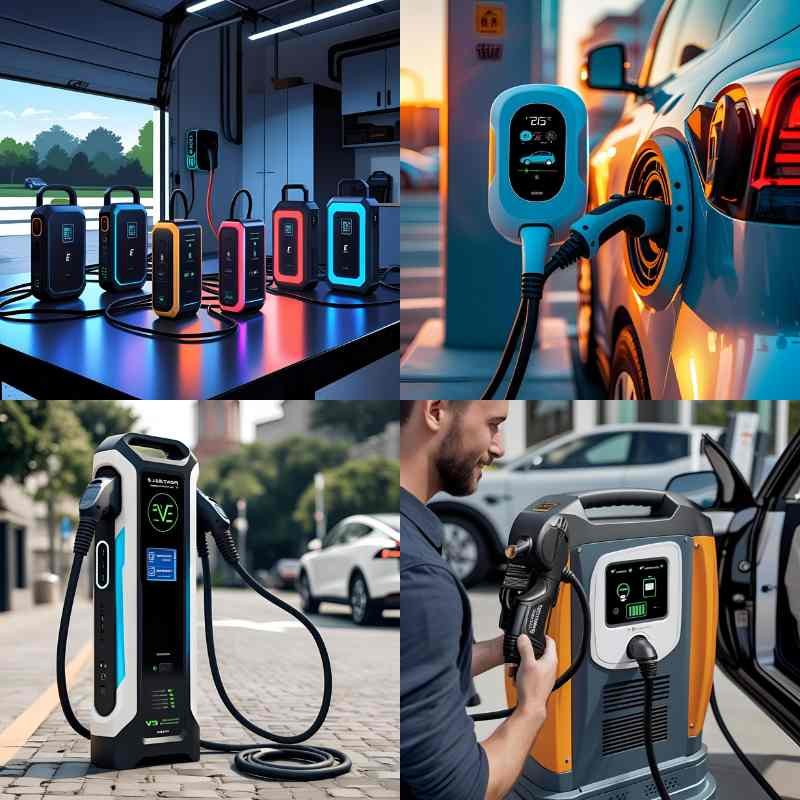
Best Portable EV Chargers in 2026: Review & Buying Tips
Best Portable EV Chargers Review – Recommendations and Tips Looking for the Best Portable EV Chargers to stay powered wherever you go? You’re not alone. As electric vehicles continue to grow in popularity across the U.S., having a dependable, on-the-go charging option is more important than ever. Whether you’re planning a weekend trip, commuting long distances, or just want peace of mind during your daily drive, portable EV chargers are a must-have accessory for modern EV owners. In this guide, we’ll break down the top-rated portable EV chargers available in the USA, highlight key features to watch for, and share smart tips to help you get the most value for your money. Say goodbye to charging anxiety—these portable solutions will keep you moving no matter where the road takes you. Top Portable EV Chargers in 2025 Lectron 40 A Portable EV Charger (NEMA 14‑50) – Best All‑Rounder Specs: Level 2, 240 V, 40 A → up to ~9.6 kW charging. Features: ETL & FCC certified, IP65 weatherproof, built-in safety protections, 16 ft cable with LED status lights Why Choose It: Fast charging, reliable, and safe—great value for daily use. Price: Around $300. Check Price Grizzl‑E Mini Portable Charger – Best for Rugged Use Specs: Adjustable 7–40 A (240 V), works Level 1 & 2. Features: Tough aluminum body, UL-rated safety, built-in GFCI, 24 ft cable, travel-ready including multiple plug adapters Why Choose It: Super durable and road-trip friendly. Price: Approx. $440. Check Price EVDANCE Flux Portable EV Charger 40 A – Great Value Pick Specs: Level 2, 240 V, 40 A. Features: Intelligent chip for real-time monitoring, IP66 waterproof, 25 ft cable, comes with carry bag Why Choose It: Rugged, smart, and budget-friendly. Price: About $289. Check Price ChargePoint Flex EV Charger (Hardwired) – Smart Option Specs: Up to 50 A, 240 V. Features: Wi-Fi, app control, voice assistant support—most advanced smart charger Why Choose It: For tech-savvy users wanting smart features. Price: Around $649. Check Price Quick EV Chargers Comparison Charger Speed (max) Portability Smart Features Durability Price Lectron 40 A ~9.6 kW Lightweight ❌ IP65, ETL $300 Grizzl‑E Mini 7–40 A adjustable Compact & rugged ❌ Aluminum, UL $440 EVDANCE Flux 40 A ~9.6 kW Portable ❌ IP66 $289 ChargePoint Flex Up to 50 A Portable ✅ Wi-Fi & App Weatherproof $649 Review Methodology Hands-On Features Check – Verified certifications, protections, cable length, and connector types. User Feedback – Focused on trusted user reviews (4★+) and tested performance. Expert Insights – Included recommendations from reputable EV review sites Value and Safety – Safety certifications and pricing were key decision factors. Why Every EV Driver Should Own a Portable EV Charger Portable EV chargers offer peace of mind and charging flexibility no matter where the road takes you. Whether you’re commuting locally or heading out on a weekend road trip, having a backup charger in your trunk can save you from long waits at public stations or worse—running out of battery. For American EV drivers, especially those living in suburban or rural areas, a portable EV charger isn’t just a smart choice—it’s a must-have. It lets you plug in at home, at work, or at any compatible outlet along your route. No installation, no waiting. Just easy, reliable charging wherever you go. Tips for Choosing the Right Portable EV Charger Choosing the best portable EV charger means knowing what matters most for your car, lifestyle, and travel habits. Here’s what to look for before you buy: Match Your Home’s Plug – NEMA 14‑50 (Level 2) gives fast charging; NEMA 6‑20 (Level 1 & 2) for slower but flexible options. Check Certifications – Look for UL, ETL, or FCC labels and safety features like overheat protection and GFCI. Portable vs. Fixed – Portable chargers are great for travel; fixed stations offer convenience at home. Smart Features – Wi-Fi controls and app tracking are useful if you want advanced monitoring and scheduling. Cable Length and Weather Protection – Longer cables and weather resistance help with both outdoor use and flexible parking. Final Recommendations Best Value Overall: Lectron 40 A — fast, certified, and under $300. Tough & Travel‑Ready: Grizzl‑E Mini — rugged build and adjustable charging in a compact form. Lowest Price for 40 A: EVDANCE Flux — reliable performance with smart safety. Smartest Choice: ChargePoint Flex — full IoT control for tech lovers, budget-conscious getters. Bottom Line:Choose a charger that fits your parking setup, desired charging speed, and lifestyle needs. These four are top picks for 2025—whether you’re charging at home, on the go, or caring about smart features. If you need more help matching a charger to your EV model or lifestyle, just ask!